
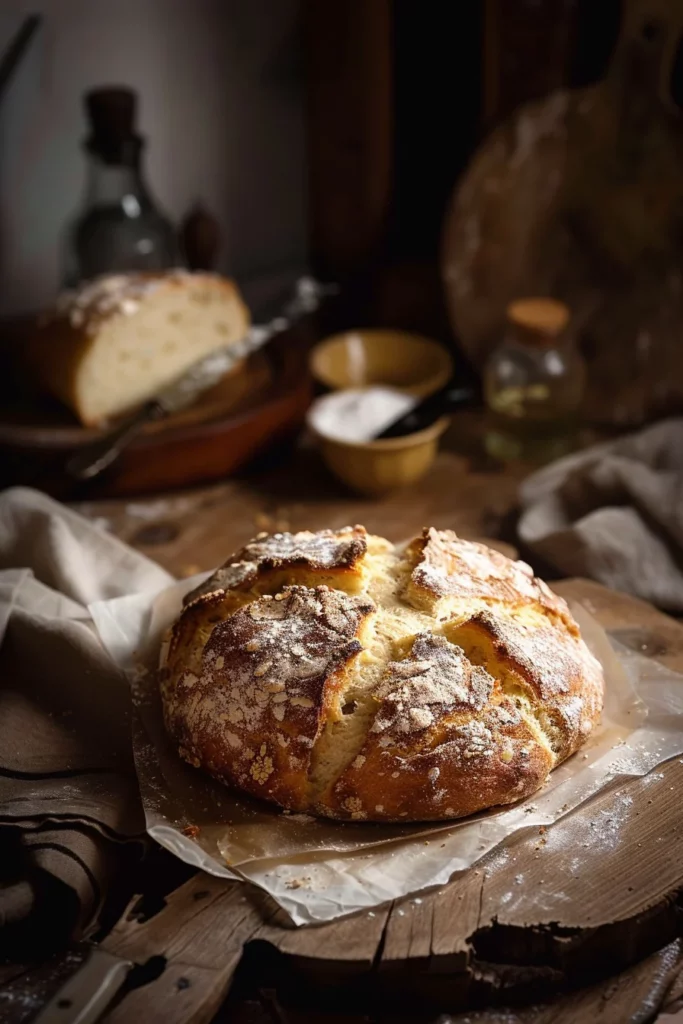
Warm, crusty, and full of old-fashioned comfort, this Traditional Irish Soda Bread with Buttermilk is the kind of recipe every kitchen should have. Made without yeast, it rises using the simple reaction between baking soda and tangy buttermilk, giving you a tender crumb and golden, rustic crust. It comes together in one bowl, requires no kneading, and bakes beautifully in under an hour — perfect for cozy meals, last-minute baking, or serving alongside hearty soups and stews.
Authentic Irish Soda Bread Recipe
Ingredients
- 4 cups all-purpose flour (plus extra for dusting)
- 1 tsp baking soda
- 1 tsp salt
- 1 ¾ cups buttermilk
- 1 tbsp sugar (optional, for a slightly softer crust)
How to Make Irish Soda Bread
Step 1: Preheat
Preheat your oven to 425°F (220°C). Grease a baking sheet or line it with parchment so the loaf lifts easily after baking.
Step 2: Mix the Dry Ingredients
In a large bowl, whisk together flour, baking soda, salt, and optional sugar. Soda bread is all about simplicity — these four ingredients are the traditional base, no butter or eggs needed.
Step 3: Add Buttermilk
Make a well in the center of the flour mixture and pour in the buttermilk. Use a wooden spoon or your hand (traditional Irish method) to bring the dough together gently. It should look shaggy and slightly sticky. Stop mixing as soon as the dough forms; overworking tightens the crumb.
Step 4: Shape the Dough
Transfer the dough onto a lightly floured surface. Shape it into a round loaf by gently tucking the edges underneath. Keep it rustic — soda bread is meant to look homemade.
Step 5: Score the Top
Using a sharp knife, cut a deep cross across the top, about ½ inch deep. This helps the heat reach the center and gives the bread its signature look. Traditionally, it was also said to “let the fairies out.”
Step 6: Bake
Bake at 425°F for 15 minutes, then reduce heat to 400°F (200°C) and bake for an additional 25–30 minutes. The loaf is done when it’s golden and the bottom sounds hollow when tapped.
Step 7: Cool + Serve
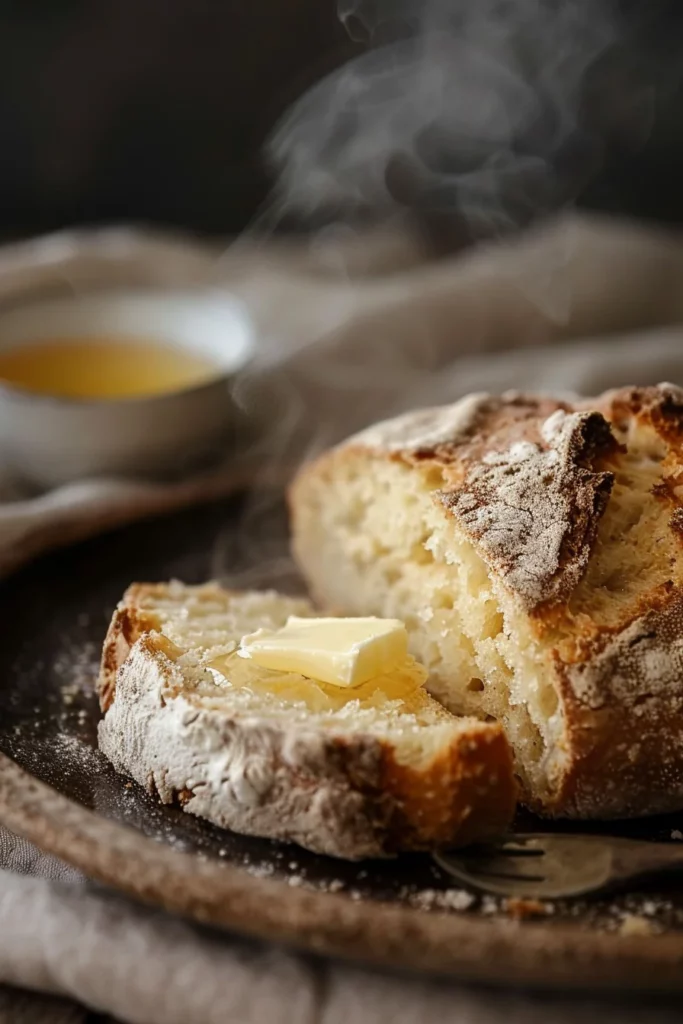
Let the bread cool on a wire rack for at least 10 minutes. Serve warm with salted butter, jam, honey, or alongside stews for a comforting meal.
Why You’ll Love This Recipe
This classic soda bread delivers everything you want in homemade baking: a crisp crust, tender interior, and pure simplicity. With just five ingredients and zero kneading, you can have a fragrant loaf ready in under an hour. It’s hearty, nourishing, and pairs with sweet or savory toppings, making it one of the most versatile breads you can bake.
Perfect Uses
- Breakfast with butter and jam
- Lunch with smoked salmon or cheese
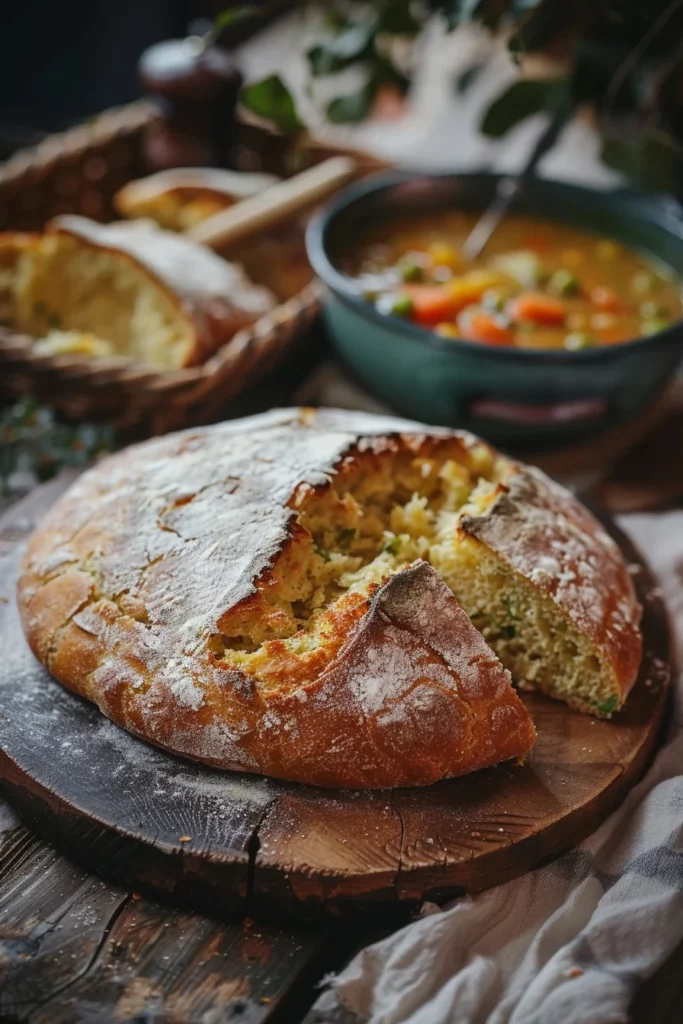
- Dinner with Irish stew or vegetable soup
Kitchen Tips
Use Real Buttermilk
The acidity is what activates the baking soda. If you don’t have any, mix 1 tbsp lemon juice or vinegar into 1 ¾ cups milk, let stand 10 minutes, then use.
Don’t Overmix
Minimal handling keeps the crumb soft and prevents the loaf from becoming dense.
Check for Doneness
A hollow sound when tapping the bottom means the loaf is baked. You can also check for an internal temperature of around 200°F (93°C).
Embrace the Rustic Look
Cracks, bumps, and uneven edges are part of the charm of true Irish soda bread.
Flavor Variations
Sweet Soda Bread
Add ¼ cup sugar and ½ cup raisins for an Irish soda farl–style loaf that’s lovely for breakfast.
Savory Cheddar + Chive
Stir in shredded cheddar and a handful of chopped chives for a flavorful twist that pairs beautifully with soups.
Whole Wheat Version
Use half all-purpose and half whole-wheat flour for a nuttier, denser texture.
Seeded Soda Bread
Mix in sunflower seeds, flax seeds, or pumpkin seeds for crunch and added nutrition.
Storage & Serving
Room Temperature
Wrap the loaf in a clean tea towel to keep the crust crisp. Enjoy within 2 days.
Fridge
Store in an airtight container up to 5 days.
Freezer
Freeze whole or sliced for up to 2 months. Reheat slices in a warm oven for 5–10 minutes to revive the crust.
Serving Ideas
- Butter + honey
- Jam + cream
- Cheese + smoked salmon
- Irish stew or vegetable soup
A Bit of Irish Tradition
Irish soda bread dates back to the 1800s, when baking soda became widely used in rural Irish kitchens. With limited access to yeast, families relied on this dependable quick bread for daily meals. Baked on a hearth or griddle, it became a staple of Irish life. The cross on top carried folklore meaning — releasing fairies, protecting the home, and blessing the loaf. Today, this simple bread remains a beloved symbol of Irish heritage and humble, resourceful cooking.
FAQ
Can I use milk instead of buttermilk?
Yes — add 1 tbsp vinegar or lemon juice to regular milk, let sit 10 minutes, and use as a substitute.
Why is my bread dense?
Overmixing the dough can make soda bread tough. Mix just until combined.
Can I bake it in a cast-iron skillet?
Absolutely. A cast-iron pan holds heat well and gives the bread a lovely crust.
Can I add butter to the dough?
Traditional soda bread does not, but 2–3 tbsp cold butter can be added for a softer crumb.
Why do we cut a cross on top?
It helps the loaf bake evenly and is part of Irish baking tradition.
? Bake a loaf this week — warm, crusty comfort in under an hour.

Traditional Irish Soda Bread with Buttermilk

Warm, crusty, and full of old-fashioned comfort, this traditional Irish soda bread recipe is easy to make without yeast and is perfect for cozy meals.
- Prep Time: 15 minutes
- Cook Time: 40 minutes
- Total Time: 55 minutes
- Yield: 8 servings
- Category: Bread
- Method: Baking
- Cuisine: Irish
- Diet: Vegetarian
Ingredients
- 4 cups all-purpose flour (plus extra for dusting)
- 1 tsp baking soda
- 1 tsp salt
- 1 ¾ cups buttermilk
- 1 tbsp sugar (optional, for a slightly softer crust)
Instructions
- Preheat your oven to 425°F (220°C). Grease a baking sheet or line it with parchment.
- Mix the dry ingredients in a large bowl: flour, baking soda, salt, and optional sugar.
- Add buttermilk by making a well in the center of the flour mixture and pour it in. Mix gently until combined.
- Shape the dough into a round loaf on a lightly floured surface.
- Score a deep cross on top of the loaf with a sharp knife.
- Bake at 425°F for 15 minutes, then reduce heat to 400°F and bake an additional 25-30 minutes.
- Cool on a wire rack for at least 10 minutes before serving.
Notes
Use real buttermilk for best results and avoid overmixing the dough to keep the crumb soft.